When reading up close gets harder, you have three main choices: reading glasses, bifocals or progressive (multifocal) lenses. Here's how they compare.
Reading glasses
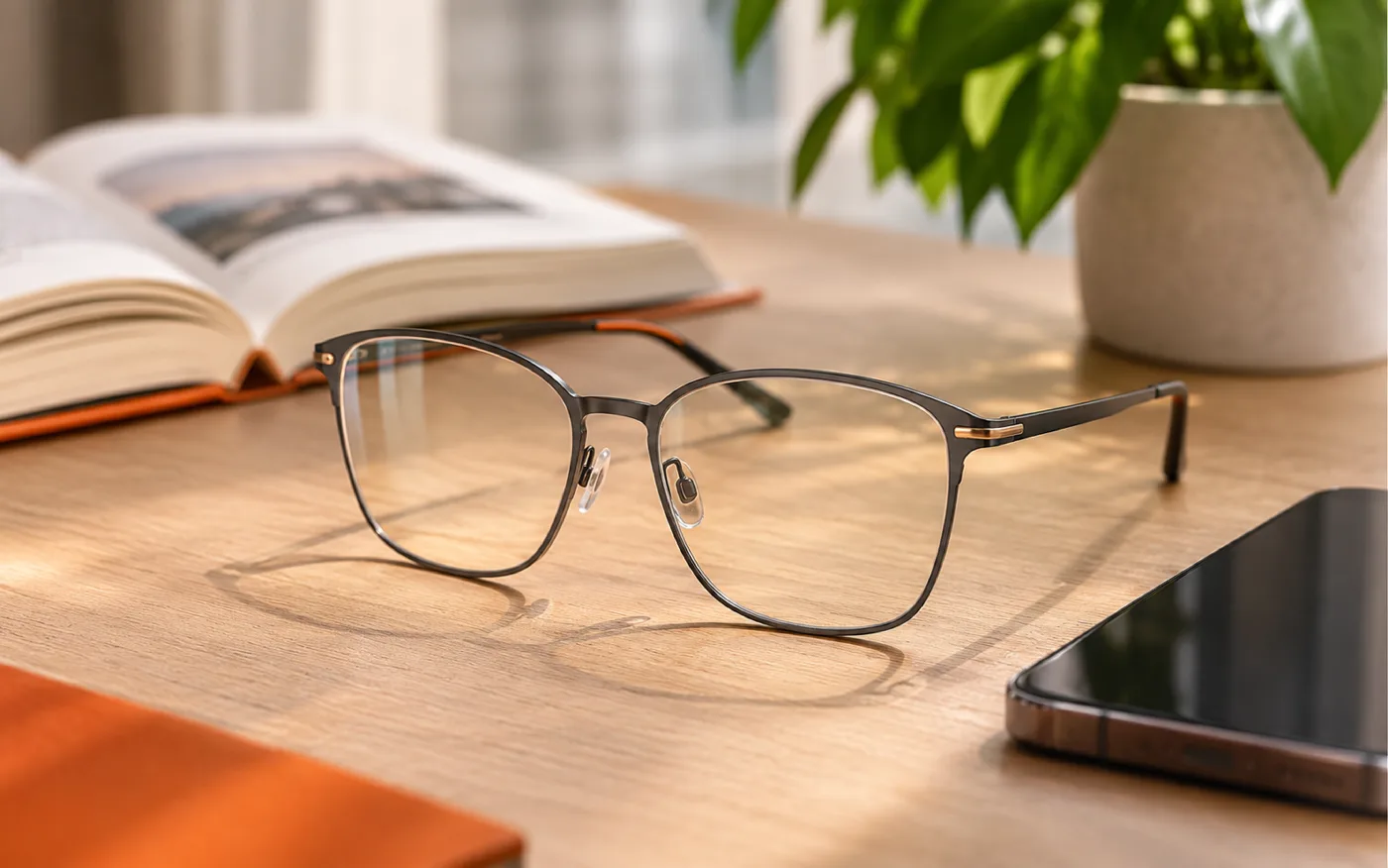
Reading glasses only correct near vision. They are simple and cheap, but you need to take them off to see anything further than arm's length – and if you also need glasses for distance, you end up carrying two pairs.
Bifocal lenses
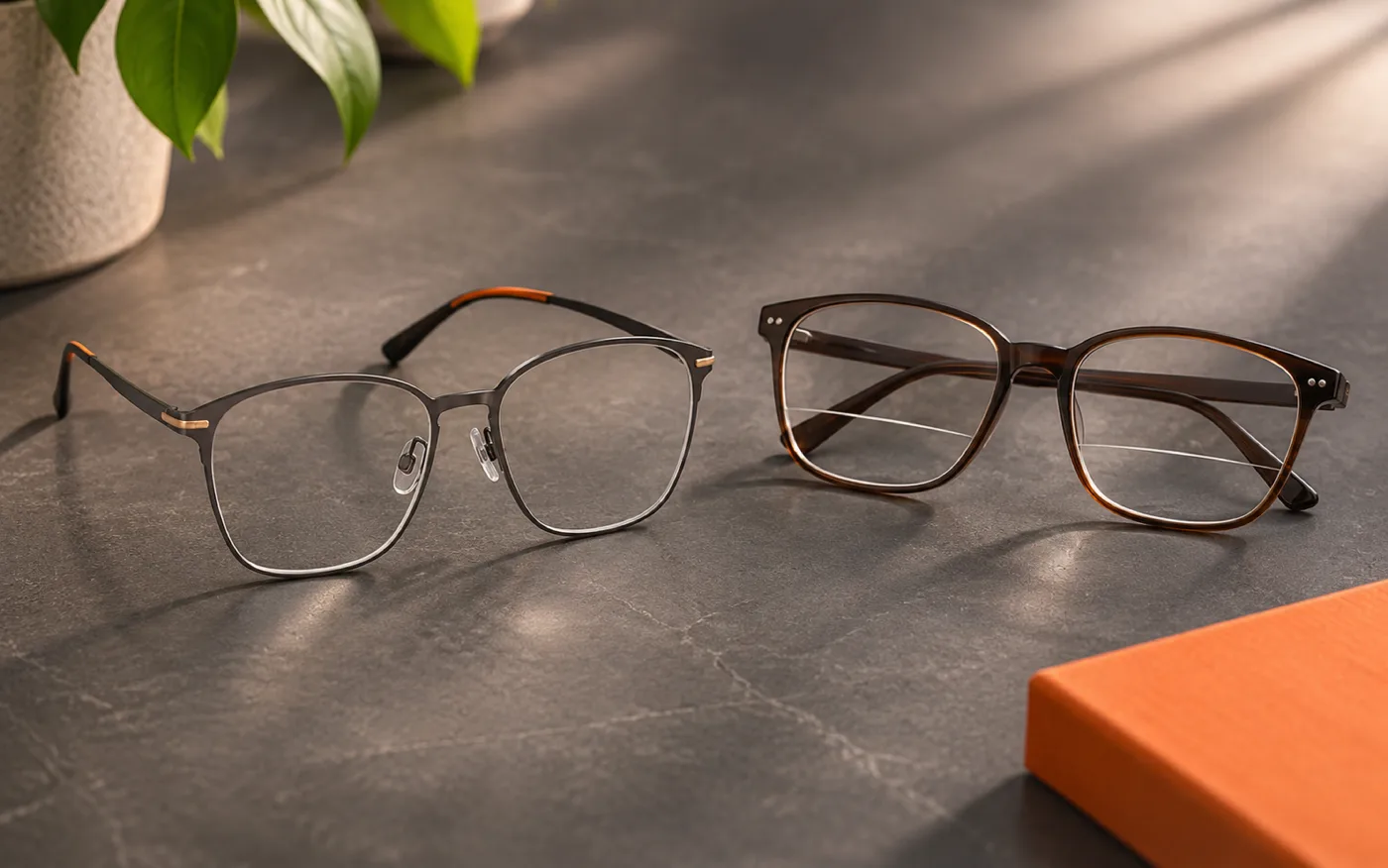
Bifocals have two zones – distance on top and reading at the bottom – separated by a visible line. They work, but there's no clear middle zone for computer screens or the car dashboard, and the line causes an "image jump" when your eyes cross it. Many people also feel the line makes them look older.
Progressive (multifocal) lenses
Progressives change power smoothly from top to bottom, giving clear distance, intermediate and near vision with no visible line. They take a little time to get used to, and the lower sides of the lens are slightly soft – but for most people they are the most natural, convenient option.
| Progressive | Bifocal | Reading | |
|---|---|---|---|
| Distance | ✔ | ✔ | ✘ |
| Computer | ✔ | Limited | Limited |
| Reading | ✔ | ✔ | ✔ |
| Visible line | No | Yes | No |
| Adaptation | 1–2 weeks | Few days | None |
Which should you choose?
If you only need help reading and don't wear glasses otherwise, reading glasses may be enough. If you need both distance and near vision – especially if you drive and use a computer – progressive lenses are usually the best choice. An eye test and a chat about your daily routine will make the decision clear.